The moment a new identity goes live is when strategy stops being a document and starts being real.
There is a specific moment in every rebrand that nobody puts in the strategy deck. The new logo goes up on the wall. The website flips live. The uniforms arrive in boxes and get handed out for the first time. Months, sometimes years, of workshops, positioning documents and design iterations suddenly become something people can actually see, touch and react to.
Everything up to that point has happened behind closed doors. The reveal is the first time it becomes real for the people the brand is actually for.
Which is exactly why it deserves more thought than it usually gets.
A brand reveal is more than a new logo
It is easy to treat the reveal as the final creative milestone. The logo is approved, the guidelines are finished, so now it is just a matter of switching everything over and telling people about it.
But a reveal that only shows the finished creative work is showing people half the story. What changed? Why it changed? What the organisation now stands for? Where it is heading? None of that is visible in a new colour palette on its own.
At Dovetail, we talk about brand and culture as two sides of the same thing: a brand isn’t just what a company says it is, it’s what employees believe and what customers experience. Our own brand engagement framework starts with Identity, defining what a brand stands for, and moves into Recognition, making sure people actually see and understand it. The reveal sits right at that hinge point. It is the moment Identity becomes Recognition. If the thinking behind the change doesn’t travel with it, that hinge doesn’t hold.
Why the reveal matters internally
Employees are usually the first audience a new brand reaches, and often the most overlooked one.
When Industry Fund Services (IFS), a 30 year partner to Australia’s superannuation sector, transitioned into an independent professional services entity, its existing brand no longer matched where the business was heading. The rebrand was built around a new tagline, “Your Super Partner”, and a modernised version of the IFS diamond mark, but the identity itself was only half the job.
The reveal was sequenced deliberately: staff saw the new brand and heard the reasoning behind it before partners and shareholders did. A launch video, built to engage employees and external partners alike, told the same story of the old identity becoming the new one to both audiences. Staff weren’t just told a new brand existed. They understood why it existed, and got to be part of it before it went any further.
That order matters more than it sounds like it should. Employees told about a change ahead of the outside world experience it as something that they are being trusted with. Employees who find out at the same time as everyone else, experience it as a press release.
That is the internal work a good reveal does. It turns employees from an audience being informed into people who understand where the business is heading and how their own role fits into that next chapter.
Why the reveal matters externally
Externally, the reveal is where a business gets to define its own narrative before the market defines it for them.
Abilitix Consulting, launching into an AI landscape crowded with businesses all reaching for the same language of intelligence, automation and trust, needed more than a new logo to stand out. The strategic insight that shaped the whole brand was clarity: not as a tagline, but as the actual value the business delivers when organisations are drowning in fragmented systems and AI generated outputs that still need interpreting.
That idea had to hold together across very different touchpoints, from consulting conversations through to the product interface itself. Dovetail built a generative visual system, internally referred to as the “Drone Show”, where thousands of data points move and resolve into structured shapes. It is a literal visual translation of the brand’s core idea: complexity resolving into something clear and usable.
That is what a strong external reveal does. It is not simply announcing a change, it is giving customers, partners and the market a clear, consistent story about what the organisation now represents and why the investment in getting there was worth it.
The danger of revealing a brand without the story
Not every rebrand gets this right the first time, and the fallout is instructive.
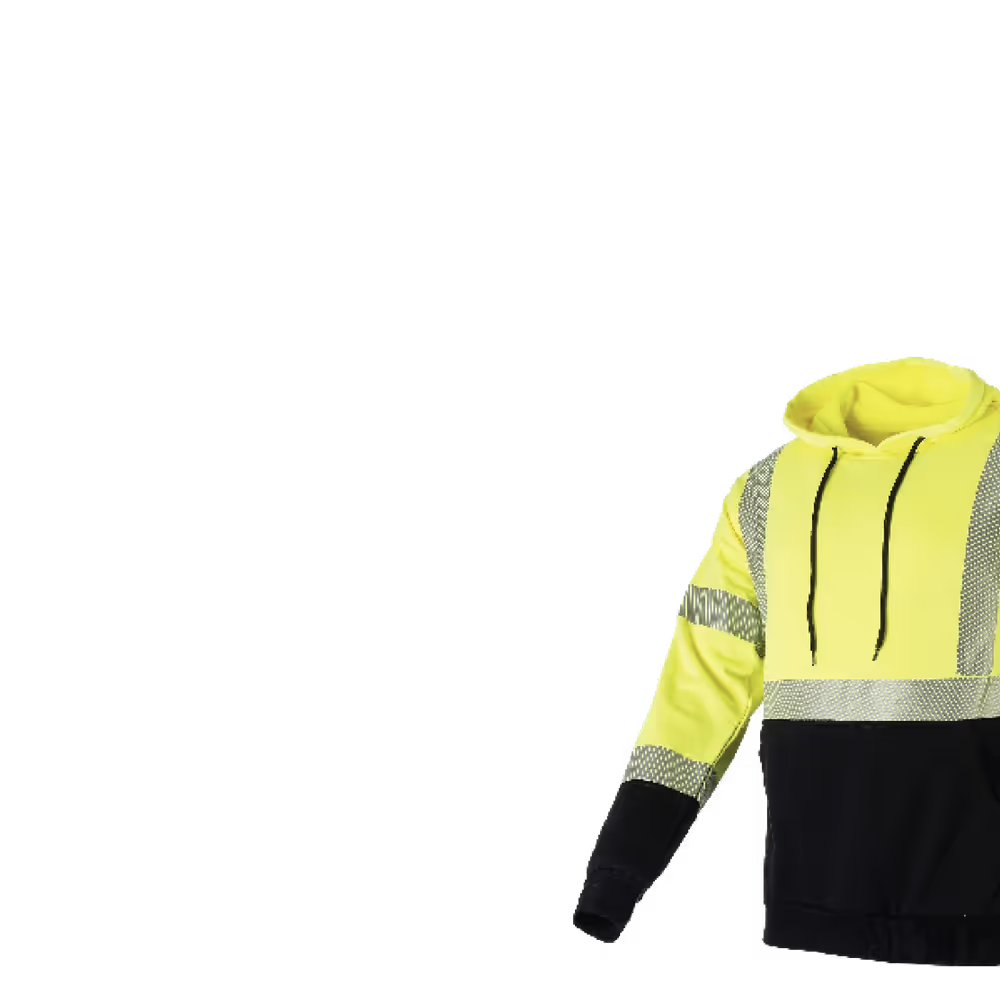
Before Dovetail became involved, TUFFA Workwear, a nearly 50 year old Australian protective apparel manufacturer, had already been through a rebrand. It was visually updated, but it no longer reflected the strength and character that customers had come to associate with the business. The identity had changed. The thinking behind why it needed to change, and what it was supposed to communicate, hadn’t come through. The result was a brand that looked different without being understood differently, by employees or by the market.
This is the risk every business runs when a reveal focuses purely on the visual switch. Employees are left guessing what has changed and why it matters. Customers notice a new look without a clear reason to trust it more than the old one. The investment in the rebrand shows up on the wall, but not in how people think or talk about the business.
Dovetail’s work with TUFFA involved rebuilding the identity around a clearer strategic position, “Frontline”, reconnecting the brand with the people it exists to protect. As TUFFA prepared to move into a new facility, that thinking was extended into the physical environment itself, through environmental graphics and spatial design that turned the workplace into part of the brand experience rather than a backdrop to it.
What makes a brand reveal work
A handful of things tend to separate a reveal that lands from one that falls flat.
• Start with the why, not the finished creative. People need the reasoning before they need the visuals.
• Bring employees into the journey early. They shouldn’t be finding out what their own organisation stands for at the same time as the public.
• Make the strategy understandable. Positioning that only makes sense in a strategy document hasn’t been communicated yet.
• Build anticipation without overdoing the mystery. Curiosity works. Confusion doesn’t.
• Create an experience around the reveal, whether that’s a physical space, an event or a digital moment. TUFFA’s new facility is a good example of a brand living in a space rather than sitting on top of it.
• Connect the internal and external story. If staff and customers are hearing different versions of what changed, neither version will fully land.
• Make sure the brand is ready to live beyond launch day. A reveal is a single moment. The brand has to survive every ordinary day after it.
The reveal is the beginning, not the end
The real test of a brand reveal isn’t how it looks on launch day. It is what happens six months later.
Does the new identity show up in how people communicate and behave, or has it quietly reverted to how things always worked? Are employees repeating the positioning in their own words, as something they were genuinely part of rather than something handed down to them? Is the brand doing the work it was built to do, or just sitting on the letterhead?
A rebrand is a body of strategic thinking. A reveal is the moment that thinking either becomes part of how an organisation operates, or gets left behind as a nice looking launch that nobody quite remembers the reasoning for.
Getting that moment right is not a finishing touch. It is part of the same work as the brand strategy itself.
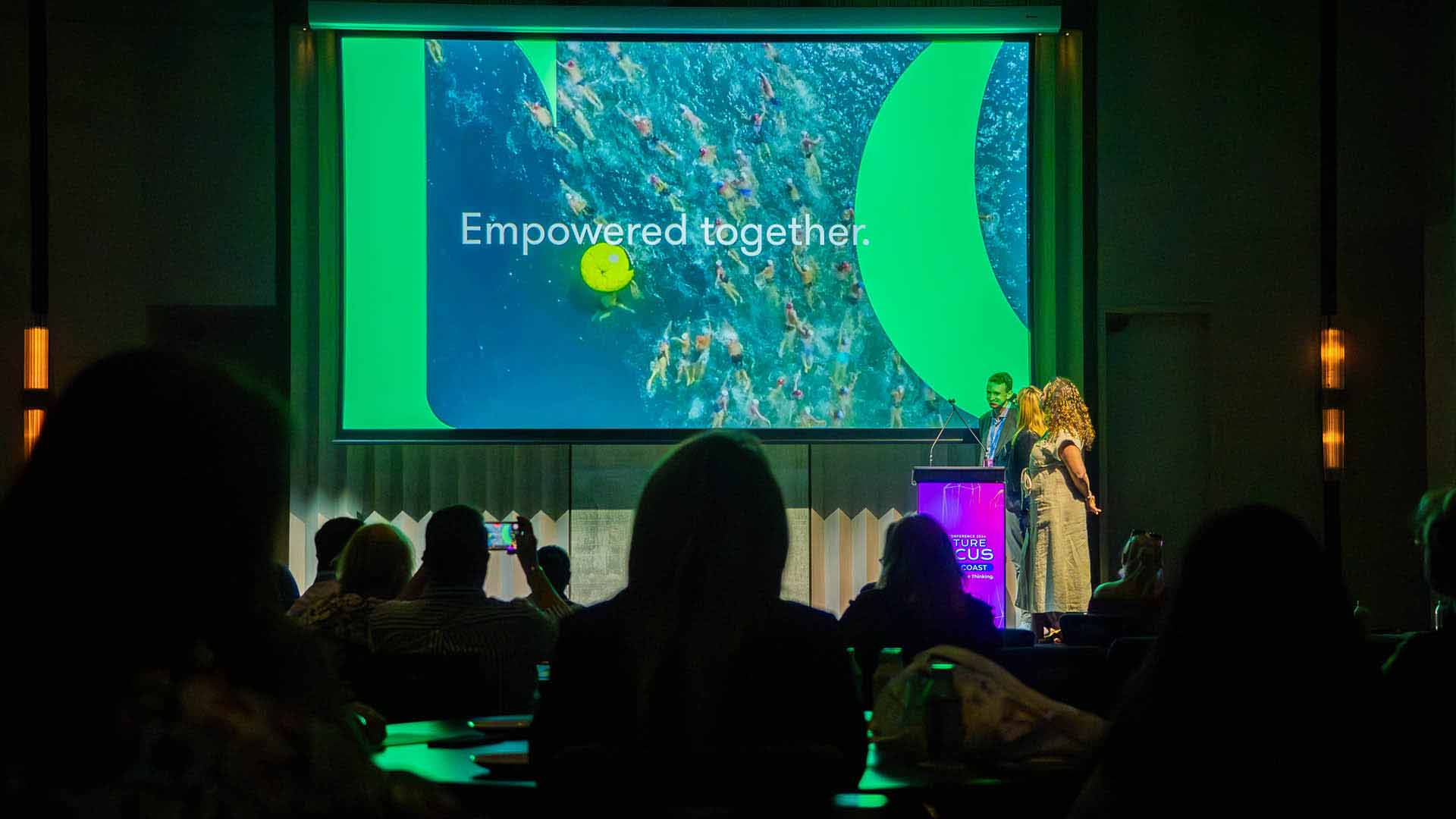
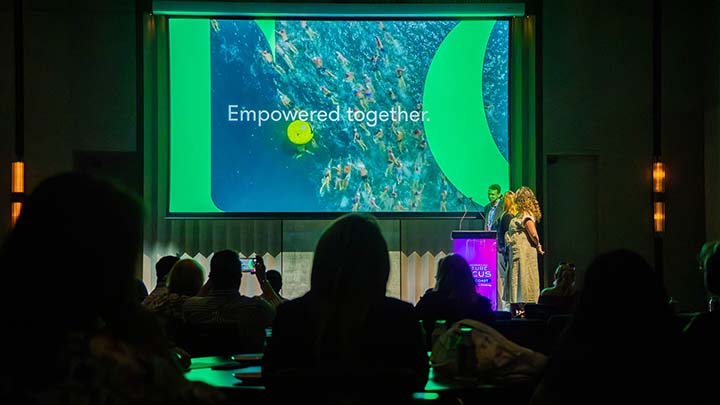
When the Australian Travel Agents Co-operative (ATAC) unveiled its refreshed brand at its Future Focus conference on the Gold Coast, Dovetail was there managing the event end to end from programme and venue through to on-site delivery. As Travel Weekly reported at the time, ATAC chair Jack Taylor framed the refresh as removing the barriers standing between members and a brand they could genuinely stand behind. Members and partners gave it a standing ovation. That is the part worth noticing: how a reveal is delivered can carry as much weight in the room as what is being revealed.
The Commercial & Asset Finance Brokers Association (CAFBA) is proof the same principle holds under real pressure. They revealed their rebrand at an industry summit in front of members, industry figures and media, with both ABC News and Channel 9 in the room. It is early days for that one, but a reveal that holds up in front of the people it has to convince, on the day it happens, speaks for itself.
Ready to bring your brand to life?
If your business is heading toward a rebrand, a refresh or a brand transformation, the reveal deserves the same strategic thinking as everything that led up to it. Get in touch with the team at Dovetail to talk through how we can help align your brand and your people, so that the moment you show the world what has changed, is the moment it actually starts to stick.








.avif)














.avif)