
Your customers see your brand through campaigns, websites and service. Your employees live it every day. When those two experiences don't match, the organisation is often the last to know.
Customers meet your brand at a handful of touchpoints. Employees meet it up close: in how decisions get made, how a manager responds when something goes wrong, and whether anyone notices when someone goes out of their way for a customer.
Most organisations assume those two versions of the brand are the same. The real question is what happens when they aren't, and how you would even know.
At Dovetail Brand Engagement, we see this gap regularly. The brand is clear on the website, but the experience inside the business tells a different story. A well-designed engagement and recognition survey is one of the most reliable ways to find it, as long as the organisation is prepared to act on what it hears.
What the organisation says, and what employees experience
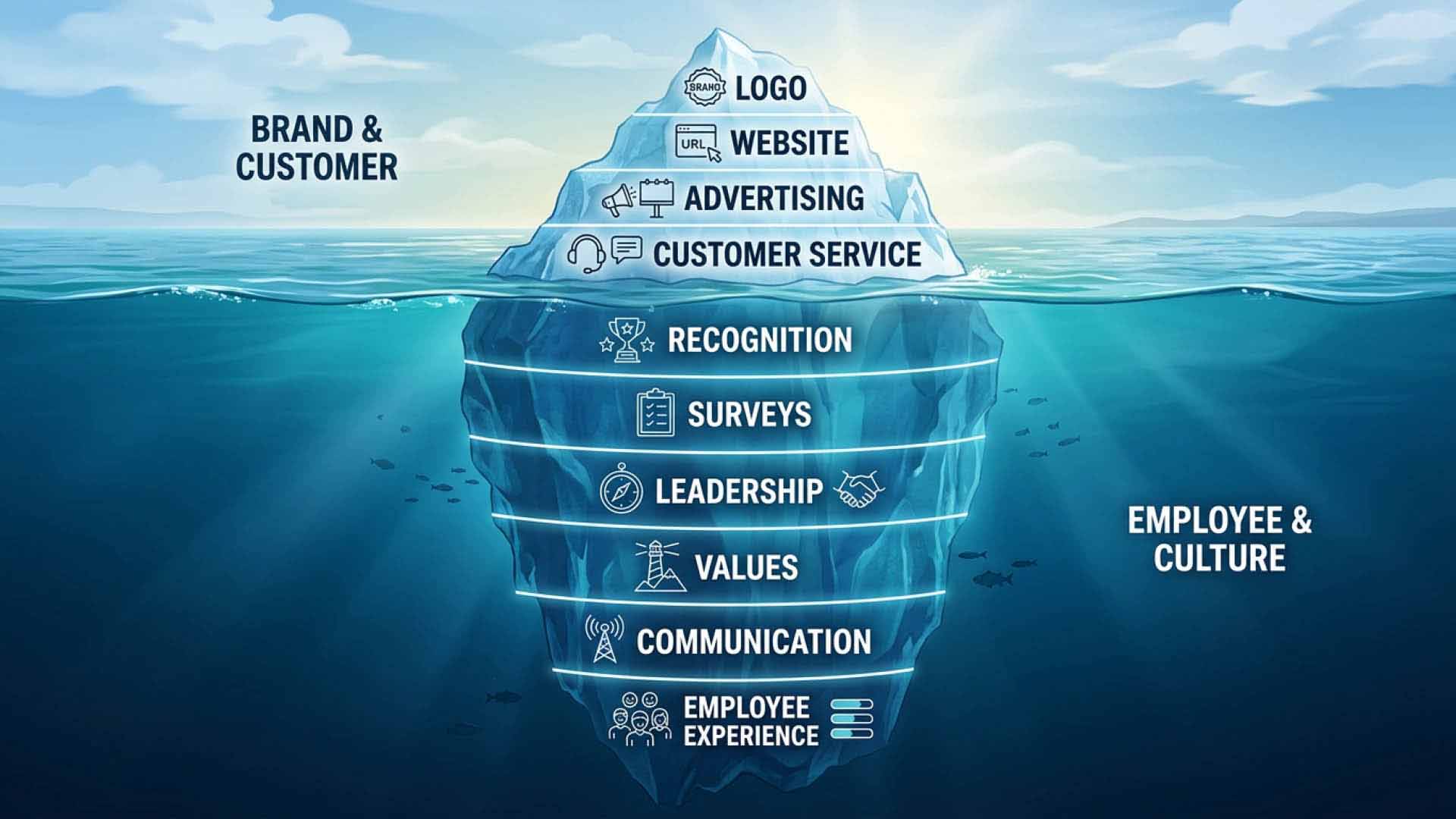
Every organisation has an internal brand, whether or not anyone manages it. It isn't the values on the wall or the EVP on the careers page. It's the sum of what people experience: how leaders behave under pressure, whether communication is honest, whether workload is realistic, and whether leaders do what they said they would.
Think of it in three layers. What the organisation says: its purpose, values, customer promise and employer brand. What employees experience day to day. And what employees carry outward, into customer conversations, recruitment chats, professional networks and review sites. When the first two line up, the third tends to follow. When they don't, people notice, and they talk.
What recognition reveals
Recognition is one of the clearest signals in that middle layer. Not the gift cards or the annual awards night, but the pattern underneath: what gets noticed, by whom, and how consistently.
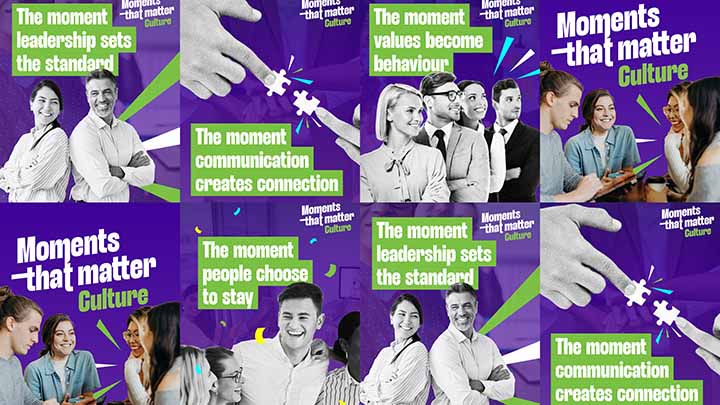
If an organisation says it's customer-first but only celebrates sales numbers, employees learn what really counts. If collaboration is a stated value but recognition goes to individual heroics, the message is just as clear. What an organisation chooses to recognise is its most honest statement of values. As we explored in Moments That Matter, culture is shaped in these everyday moments far more than in any strategy document.
That's why having a recognition program and having a culture where people feel recognised are not the same thing.
57% of leaders believe employees frequently feel recognised for their work. Only a third of employees say they do.
Reward Gateway | Edenred, 2026 Workplace Engagement Index (1,021 employees and 1,030 decision makers, Australia and New Zealand)
Culture Amp's Australian benchmark points the same way, with recognition among the areas where Australian employees score well below the global average. A program can exist on paper while the lived experience is patchy, dependent on individual managers or skewed toward the most visible work.
What the survey uncovers
The same research found 46% of decision makers believe engagement in their organisation has increased, while only 25% of employees say they feel more engaged. Leaders aren't being careless. They're simply viewing the organisation from a different vantage point.
An employee engagement survey is one of the few structured ways to see the organisation from the inside. Design matters. A generic questionnaire produces data. A survey built around your values, brand promise and strategic priorities produces insight: whether people understand what the organisation stands for, whether they see leaders living it, whether recognition feels fair and timely, and whether they'd recommend the organisation as a place to work.
"A survey tells you what people think. A well-designed one tells you why, and that's the part leaders can do something with."
Jackie Gordon, Director - HR & Events, Dovetail Brand Engagement
We've written before about surveying employees and customers together to expose gaps between the internal and external brand. The next step is deciding what to do when the employee side tells you something uncomfortable.
What happens after the survey
Uncomfortable feedback is useful. The real risk is asking for honesty and then appearing to ignore it. In Culture Amp's July 2026 Australian benchmark, Action was the area Australian employees felt least positive about overall, the category concerned with whether organisations follow through.
Employees notice when the survey arrives every year, the same issues surface and nothing visibly changes. Asking for feedback creates an expectation. Listening doesn't mean agreeing with everything or fixing everything. It means understanding the themes, being clear about what the organisation can influence and being honest about what happens next.
The discipline is simple, even if the work isn't. Listen. Understand the themes behind the numbers. Prioritise what matters most and can realistically change. Act. Tell people what you heard. Then measure again.
We saw this play out in our employee engagement survey work with Havenhall, a fast-growing pharmacy sales business. The confidential, company-wide survey combined Likert-scale questions on leadership, communication, brand connection and development with open-ended prompts, and 95% of employees completed it. Insights were shared with management and cascaded through the business, and the feedback led Havenhall to introduce a formal reward and recognition program, improve meeting structures and increase support for career development. The same survey was repeated a year later, with noticeable improvements across these areas, showing how turning employee feedback into action can create measurable change over time.
As Alan Bloom, Managing Director of Havenhall, put it:
"They helped us uncover meaningful insights that we've since turned into action."
What customers end up feeling
Customers will never read your engagement survey, but they experience the culture behind it. A business that promises to be customer-first while employees report internal friction, little authority to solve problems and no recognition for customer-focused behaviour has a contradiction built in. It may not show immediately, but it tends to show eventually: in service, in turnover, in what people say about their employer.
None of this means a higher engagement score guarantees a stronger brand. The relationship isn't that tidy. But employee experience is part of the foundation the external brand is delivered from.
"You can't sustainably build a brand outside the business that your people don't believe in inside it."
Marcus Gibbs, Director - Design & Marketing, Dovetail Brand Engagement
What leaders need
This is where Dovetail works, at the point where people and brand meet. We design and build tailored employee engagement and recognition surveys around what genuinely matters to your organisation, then analyse and interpret the findings so leaders get clarity rather than a stack of charts.
"Recognition scored 62%" is a data point. "Recognition is strong in some teams and almost absent in others, which points to manager capability rather than the program itself" is something a leadership team can act on. We shape the findings into concise presentations for each audience: strategic themes and priorities for directors and executives, practical focus areas for managers, and a clear account of what was heard and what happens next for employees.
Where the value begins
The most useful question after an engagement survey isn't "What was our score?" It's "What are our people telling us about the organisation we're becoming?"
If you want customers to experience a particular brand, your employees need to experience something that supports it. The survey is how you listen. Recognition is one of the clearest signals. Action is where the value begins.
Want to understand how your people experience your brand from the inside?
Get in touch with Dovetail Brand Engagement today.








.avif)





.avif)