
At Dovetail Brand Engagement, we’ve spent over a decade creating events where the initial brief from the client often looks identical from one to the next. Similar formats, similar audiences, similar objectives.
Yet the outcomes are completely different.
Sometimes events are easily forgotten once people leave the room.
At Dovetail we do not take the cookie cutter approach. We curate events that continue to shape conversations, decisions, and behaviour long after they end.
The difference rarely sits in what is most visible. It sits in the smaller, often unspoken moments that define how the experience is actually felt.
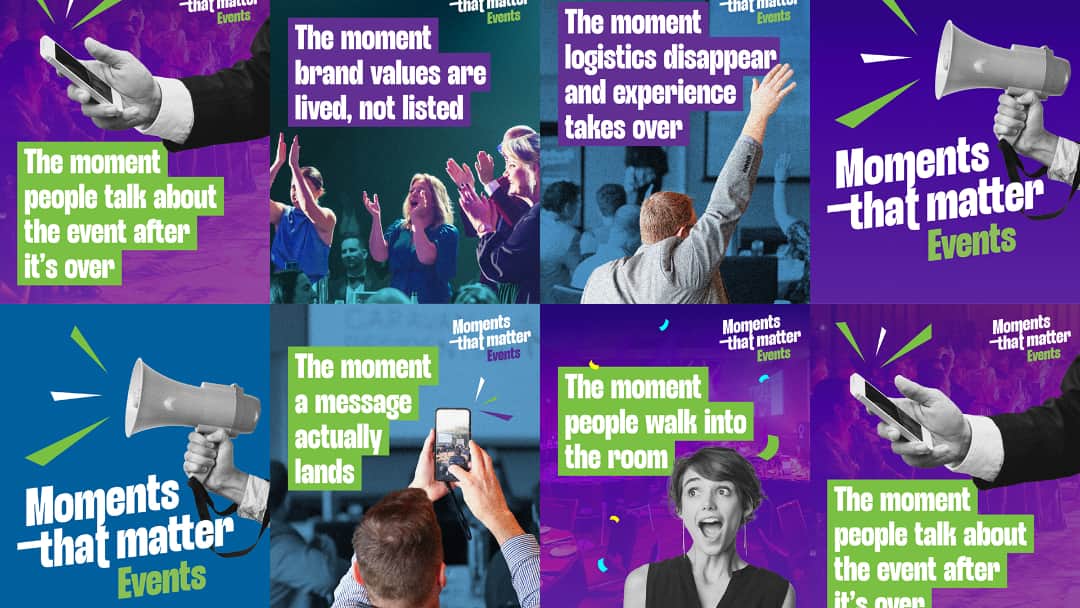
We refer to these as Moments That Matter.
Individually, they can feel subtle. Together, they determine everything.
1. The moment people walk into the room
The experience begins before any agenda item is delivered.
The moment a guest enters a space, they are already forming an impression that will influence how they engage with everything that follows.
Lighting, sound, spatial design, movement, and atmosphere all contribute to this first reading. In well-designed environments, this moment does more than welcome people. It sets tone, expectation, and emotional readiness in seconds.
Across large-scale events such as national conferences and awards programs, including environments like the CAFBA National Broker and Financier Awards, this moment is often the first shift in energy. Guests are not just arriving. They are stepping into a defined experience that signals intent from the outset.
When this is considered properly, everything that follows has a stronger foundation.
2. The moment brand values are lived, not listed
From that point forward, events either reinforce what an organisation stands for or dilute it.
Many events communicate values. Far fewer allow them to be experienced.
When values are embedded into how an event operates - through behaviour, leadership presence, interaction, and design, they stop existing as statements and start becoming observable.
We’ve seen this clearly in industry environments such as Reid Stockfeeds, CAFBA and ATAC, where culture is not explained to attendees, but demonstrated through how people engage in the space. The result is immediate recognition of alignment. Not because it is told, but because it is felt.
In these moments, the brand moves from message to experience.
3. The moment a message actually lands
Events are often built around communication. But communication alone does not guarantee impact.
A message only becomes meaningful when it is absorbed, not just delivered.
This happens when storytelling, structure, environment, and pacing work together rather than independently. When each reinforces the other, clarity increases and retention follows.
Across programs such as CSIA and large-scale conferences like VicParks, we’ve seen this play out in real time. Messages introduced on stage continue to surface later in conversation, inform decisions, and influence thinking well beyond the event itself.
At that point, the message is no longer part of the program. It becomes part of what people take away from it.
4. The moment logistics disappear and experience takes over
Behind every seamless event is a significant level of operational control. But the most effective execution is the kind that is not noticed.
When logistics are working properly, they fade into the background. Movement feels natural. Transitions feel considered. Timing supports engagement rather than interrupting it.
We’ve seen this across large-scale environments where complexity is deliberately removed from the guest experience. For example, multi-zone activations, exhibitions, and evening programs operate without friction, allowing attention to remain on people and content rather than process.
When logistics disappear, experience becomes the focus.
5. The moment people talk about the event after it’s over
The final measure of an event is rarely found within the room. It is found afterwards.
Conversations continue. Ideas resurface. Reflections emerge days or weeks later in entirely different contexts. In stronger cases, moments from a single event go on to influence decisions, relationships, and strategy long after the event has ended.
We’ve seen this across awards nights, conferences, and industry gatherings where brief interactions evolve into long-term outcomes. A single moment on stage becomes a reference point in future discussions. A shared experience becomes the start of something ongoing.
When that happens, the event is no longer contained by time. It continues to work.
Bringing it together
Each of these moments can appear small in isolation. But together, they define whether an event is simply delivered or genuinely experienced.
When they are designed with intention, events move beyond programming and logistics. They become environments that shape perception, influence behaviour, and extend impact far beyond the room itself.
And that is ultimately what Moments That Matter explores.
Not just what happens at events, but the moments that quietly determine what happens because of them.